Showing posts with label Netmeeting. Show all posts

Wednesday, November 5, 2008

Do I look like my Avatar?

In my last post we talked about NetMeeting and the fact it was rather old fashion. Let's now move to the other extreme, the use of 3D virtual collaboration software such as Qwaq, Nortel's Web.Alive or environments such as the ones that can be found in Second Life. In her blog entry "Restoring the Meaning of Virtual Collaboration", Patti Anklam speaks about Sun's Project Wonderland, another attempt in this area.

What is different is that, using a personification of yourself, called an avatar you basically work in a video game. You can walk through a room, where your presentation is hanging on the wall and stop, together with the avatars of the other people you are working with and discuss what is being displayed.

Is that science fiction? Actually not, early versions of such software is available today and companies are starting to use such collaboration approaches. The fundamental question in my mind is whether we actually need such fancy approaches or not. I am sure the younger generation, who grew up with video games, is fully acquainted to work that way. Others need to get used to it. I am asking myself what the added value is of going this far. Testing out some of the environments, I found the inclusion and update of the work documents rather slow.

Being able to share a common document or application is critical for virtual collaboration, being able to take control, enter information, perform changes etc. is mandatory. But do I need to have my avatar running around in a virtual room to achieve this? That's what I am absolutely not convinced about. I can already hear some of you telling me I'm old-fashion. And you may actually be right, but I am trying to separate hype from usefulness. And I cannot find the added value of my avatar.

Working remotely with somebody is unnerving for people that are not used to it, in the sense they are working with somebody they do not see. To address that, I used to swap photos with my remote collaborators. You may argue that this is the reason of the avatar. And it could be, unfortunately, you can choose any avatar, so there is no resemblance between your avatar and yourself. In that sense it defeats the purpose. Do you agree with me?

Friday, October 31, 2008

NetMeeting, a Dinosaur?

A couple weeks ago, a friend and I were asked to prepare a four hour session about web 2.0 for a leadership training course of one of our joint customers. They wanted an emphasis on collaboration, marketing and increased customer interaction. What made things interesting is that my friend lives and works in North America, while, as you know, I am living in Brussels. To make things even more interesting, my friend cannot be physically in the training room, but will have to call in remotely. This will really force us to use all the capabilities of the Internet. One of them that came to my mind immediately was obviously NetMeeting. I am saying obviously, because this is a tool both of us have been using over the years.

New Picture (3)Googleling (is this actually English?) the term NetMeeting, I ran into a couple interesting pieces of information. First I found "The Web Conferencing Blog" where David Chao points out it is really a hassle to use the product as setting up the connection is lengthy and difficult and consists in getting IP addresses and typing them in. And yes, this is an issue I have personally experienced a number of times already, so I can relate to the post. However, NetMeeting is a tool that is  recognized and accepted by many IT departments. There exist many other tools, many of which are more effective and faster, but either they are not free, or not "safe" enough for the IT experts. David is also pointing out the product is obsolete and not ported to Vista.

Here I have to disagree with David, as I found on Kurt Shintaku's blog a note dated November 2nd (can I now time travel?) and pointing to the Beta version of NetMeeting 3.02 for Vista.

The reason we plan to use NetMeeting is that, despite the unfriendliness of the set-up of the connection, it is very easy to share control. In the training we are giving, we are sharing short sessions, and so being able to take control over at each session needs to be quick and fast.

So, yes, NetMeeting may sound like a dinosaur, but then a well preserved one that still provides a lot of service to many people.

Monday, June 30, 2008

Multi-Media Collaboration, myth or reality?

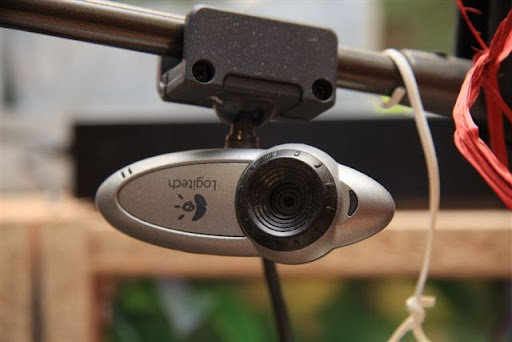
IMG_0794 Today I was talking with one of my colleagues who did just hang up from a call with his boss. Wouldn't it be so much easier to see his face on my screen when I talk to hem, he pointed out to me. And indeed, he is probably right.

Including video in communications is something that is done daily today. Friends, who's son is currently living in Cairo with a small child, are seeing their grand daughter growing day after day through Skype. They love it as it really establishes a relationship between them. Why is that not used in the corporate world? It's actually a good question.

In our company, the video portion of NetMeeting is disabled to ensure we cannot use it. When asking around, two key arguments come up. The first is, not surprisingly, cost reduction. It seems such video feeds take quite some bandwidth and would clog the corporate network. The Internet isn't, so why would the corporate network be? And with all the fiber in the ground, capacity is cheaply available if required. The second argument is security. And here too, I have my question marks. Knowing that our phones are tapped, our SMS's followed etc. what is the security issue here? Is it really such an issue if somebody sees my face? Or is it the IT department that is not eager to have things done outside their control?

The fundamental question is really how much we could improve productivity through the use of more multi-media collaboration techniques? I would like to argue that the potential additional cost and risk of using such tools is easily offset by the benefits gained from higher productivity and improved communication.